
What is a VNX+ System? Understanding the VITA 90 Standard for Rugged Embedded Computing
Monday | March 16, 2026
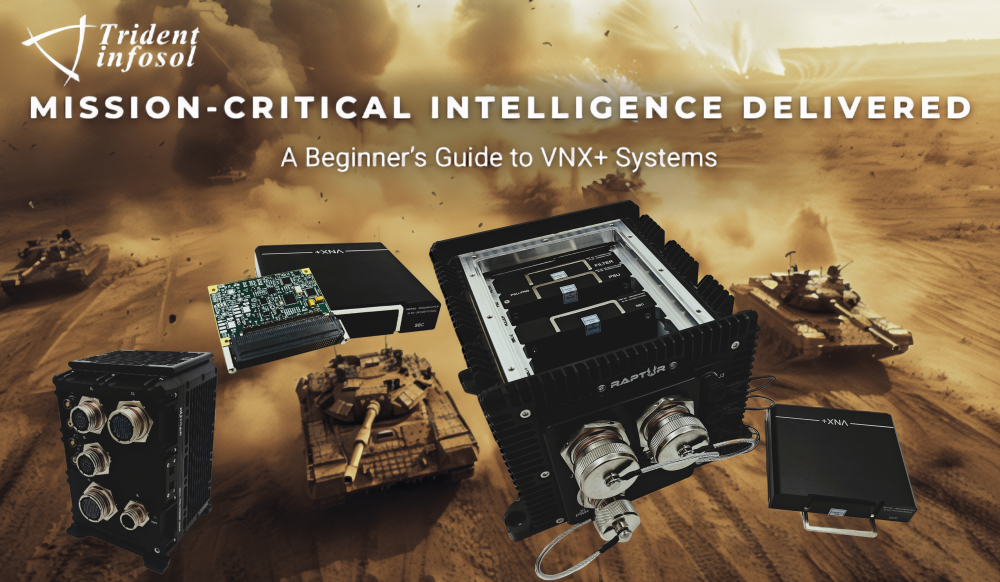
Modern defense, aerospace, and industrial applications are placing increasing pressure on embedded computing platforms. Systems must now operate reliably in extreme temperatures, under vibration, in electromagnetically hostile environments—all while managing growing data workloads and shrinking size, weight, and power (SWaP) constraints.
Meeting these demands requires a new generation of computing architecture, one that is modular, scalable, and built to an open standard. That is precisely the problem the VNX+ system was designed to solve.
What Is the VNX+ Standard?
VNX+ also referred to as VITA 90 is an open embedded computing standard developed under the VITA (VMEbus International Trade Association) standards body. It defines a specification for small-form-factor, rugged, modular computing systems built around a 19mm module.
The standard establishes rules for dimensions, backplane architecture, inter-module connectivity, and environmental compliance. By standardizing these elements, VITA 90 platforms allow hardware developers and system integrators to mix and match compute, I/O, power, and communication modules from compliant vendors—dramatically reducing integration time and supplier lock-in.
Core Architecture: How a VNX+ System Is Structured
A typical VNX+ system is built around a modular backplane—a central bus that allows individual functional modules to be inserted, removed, and replaced independently. Each module slot follows the 19mm dimension defined by the standard, keeping the overall system compact while allowing meaningful functional density.
- • Power Supply Unit (PSU) - handles input voltage regulation and distribution to other modules
- • EMI Filter Module — provides electromagnetic interference filtering at the system input
- • Single Board Computer (SBC) — the primary compute element, typically based on a high-performance 11th Gen Intel® Core™ i7-1185GRE Processor
- • GPU/AI Accelerator Module - dedicated processing for inference, image processing, or signal workloads
- • Holdup Module - ensures uninterrupted power during input transients
- • I/O Carrier Module - provides connectivity interfaces such as PCIe, RS-422, CAN, USB, and serial
- • Ethernet Switch Module - enables multi-port Gigabit networking within and outside the chassis
The key module categories in a VNX+ architecture include:
Why the VITA 90 Standard Matters
Open standards like VITA 90 exist for good reasons. In defense and aerospace procurement, proprietary systems create long-term dependency on a single vendor, complicate maintenance and upgrades, and increase lifecycle costs.
- • System integrators can source compliant modules from multiple vendors
- • Upgrades to individual modules do not require platform redesign
- • Qualification and certification efforts are reduced because the base architecture is already standard-compliant
- • Interoperability with other VITA-family systems is maintained
With a VNX+ system:
The VITA 90 standard also specifies environmental and electrical compliance thresholds, which align closely with MIL-STD requirements — making VNX+ platforms well-suited for defense certification pathways including MIL-STD-810H, MIL-STD-461G, MIL-STD-704F/1275F.
SWaP Optimization: The Design Principle Behind VNX+
One of the defining characteristics of the VNX+ standard is its intentional focus on size, weight, and power. Legacy rugged computing form factors—while capable—were often large, heavy, and power-hungry by today's standards. VITA 90 platforms are purpose-designed for constrained platforms: unmanned aerial vehicles (UAVs), ground vehicles, naval systems, and airborne pods where every gram and watt is accounted for.
The 19mm module and compact backplane geometry allow capable multi-module systems to fit within enclosures that would be considered remarkably small for their processing throughput. Conduction-cooled (fanless) thermal design further reduces mechanical complexity and eliminates moving parts that could fail in harsh conditions.
Customization and Third-Party Module Integration
A key advantage of the VNX+ ecosystem is that the standard is open. System designers are not confined to a fixed module set from a single manufacturer. Compliant third-party VNX+ modules—whether custom I/O boards or domain-specific systems—can be integrated into a VNX+ chassis as long as they conform to the VITA 90 mechanical and electrical specification.
Conclusion: A Platform Designed for How Defense and Industry Operate
The VNX+ system represents a mature, thoughtful response to the realities of modern embedded computing in demanding environments. By standardizing the modular architecture, VITA 90 gives engineers a reliable foundation that balances performance, compactness, modularity, and ruggedness in a way that proprietary or one-off designs cannot.
Explore VNX+ compliant systems designed for your mission requirements at Trident SFF.
Contact our team to discuss your application and discover how our modular platforms can be configured to your exact operational needs us-sales@trident-sff.com | www.trident-sff.com